Site Search

Friday, April 4, 2008

Waikiki Beach - Hawaii

Waikiki seen from the top of Diamond Head (Lēʻahi). Green area below is the lawn at Kapiʻolani Park.

Waikiki seen from the top of Diamond HeadLēʻahi). Green area below is the lawn at Kapiʻolani Park.

Waikiki (Hawaiian Waikīkī pronounced [ʋaikiːkiː]) is a neighborhood of Honolulu, in the City & County of Honolulu, on the south shore of the island of Oahu, Hawaii. Waikiki Beach is the shoreline fronting Waikiki and one of the best known beaches in the world.

Waikiki beach at night

Waikiki beach at night

The neighborhood extends from the Ala Wai Canal (a channel dug to drain former wetlands) on the west and north, to Diamond Head (Lēʻahi) on the east. The name means spouting water in Hawaiian for springs and streams that fed wetlands that once separated Waikiki from the interior. Waikiki has long been a place of relaxation. In particular, the area was a retreat for Hawaiian royalty in the 1800s.

Waikiki beach looking towards Diamond Head

Waikiki beach looking towards Diamond Head

Today the neighborhood and beach are considered the center of the tourist industry in Hawaii, with an abundance of both high-rise resort hotels (including the Hilton Hawaiian Village, the Halekulani hotel, the Hyatt Regency Waikiki, and the Sheraton Waikiki) and historic hotels dating back to the early 20th century (such as the Moana Surfrider Hotel and the Royal Hawaiian Hotel).

Waikiki beach at sunset

As seen in the picture, Waikiki Beach is noted for its magnificent view of Diamond Head. The frequently visited tourist beach, easily accessible by an alley next to the Royal Hawaiian Hotel, is actually fairly short, with half of it marked off for surfers. For some distance into the ocean the water is quite shallow, although there are numerous rocks on the bottom, so waders should watch where they put their feet. As with most ocean beaches the waves can have some force, particularly on windy days.

The beach has had its problems with erosion, leading to the construction of groins and beach replenishment projects. For example, in the 1920s and 1930s sand was obtained from Manhattan Beach, California, and transported via ship and barges to Waikiki.[1]

Since 2001, there have been free movies on the beach. Many tourists from around the world can view a movie on an outdoor 30 foot screen. This particular free movie event in Waikiki is called "Sunset on the Beach".


  • Swim in Lifeguarded Areas
  • Never Swim Alone
  • Don't Dive Into Unknown Water or Into Shallow Breaking Waves
  • Ask a Lifeguard About Beach and Surf Conditions Before Swimming
  • If You Are Unable to Swim Out of a Strong Current, Signal for Help
  • Rely on Your Swimming Ability Rather Than a Flotation Device
  • Look For, Read and Obey All Beach Safety Signs and Symbols
  • If In Doubt, Just Stay Out!

Thursday, April 3, 2008

Bali: Overview


Lush and languid, Bali beguiles with its beach-side charms.

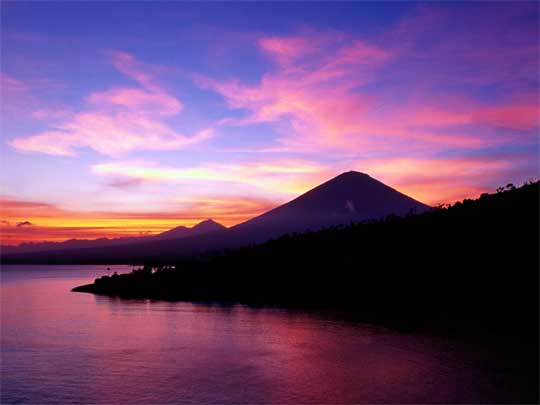
Bali is so picturesque that you could be fooled into thinking it was a painted backdrop: rice paddies trip down hillsides like giant steps, volcanoes soar through the clouds, the forests are lush and tropical, and the beaches are lapped by the warm waters of the Indian Ocean.

Recent tragic events have scared away many of those who simply saw Bali as a place for cheap beer. While the Bintang is still tasty and plentiful, Bali's temples, ceremonies, beaches, mountains and passion for life are undiminished and more easily enjoyed than ever.

Travel Warning: Check Before You Leave

High level terrorism-related warnings have been issued by Western governments concerning travel in Indonesia, including Bali. Travellers are advised to check with their local embassy or travel advisory for up-to-date information before making travel plans. Terrorist bombings aimed at tourists took place in 2002 and 2005 and although it is normally safe, the island could be a target in the future.

Check out Safe Travel for updated government warnings.

severity: High-level alert

Weather

Just 8° south of the equator, Bali has a tropical climate - the average temperature hovers around 30°C (mid-80s°F) all year. Direct sun feels incredibly hot, especially in the middle of the day. In the wet season, from October to March, the humidity can be very high and oppressive. The almost daily tropical downpours come as a relief, then pass quickly, leaving flooded streets and renewed humidity. The dry season (April to September) is generally sunnier, less humid and, from a weather point of view, the best time to visit, though downpours can occur at any time.

There are marked variations across the island. The coast is hotter, but sea breezes can temper the heat. As you move inland you also move up, so the altitude works to keep things cool - at times it can get chilly up in the highlands, and a warm sweater or light jacket can be a good idea in mountain villages such as Kintamani and Candikuning. The northern slopes of Gunung Batur always seem to be wet and misty, while a few kilometres away, the east coast is nearly always dry and sunny.

Air-con is not really needed on Bali at night. A cool breeze always seems to spring up in the evening, and the open bamboo windows, so common in Balinese architecture, make the most of the light breezes.

Events

Apart from the usual western calendar, the Balinese also use two local calendars, the Hindu saka and the wuku . The wuku calendar, which is used to determine festival dates, uses 10 different types of weeks between one and 10 days long, all running simultaneously! The intersection of the various weeks determines auspicious days. It's impossible to work it out yourself: when you arrive in Bali, go to a tourist office and ask which festivals and celebrations are coming up. Try to get to at least one.

The Galungan Festival , Bali's major feast, is held throughout the island and is an annual event in the wuku year. During this 10-day period all the gods come down to earth for the festivities and barongs (mythical lion-dog creatures) prance from temple to temple and village to village. The last and most important day of the festival is Kuningan .

is the major festival of the saka year - it's the last day of the year, and usually falls towards the end of March or the beginning of April. The day before is set aside as a day of purification across the island. The night before, evil spirits are noisily chased away with cymbals, gongs, drums and flaming torches. On Nyepi itself, everyone stays quietly at home, making no noise, using no lights and doing no cooking. The idea is that when evil spirits descend, they are fooled into thinking that Bali is uninhabited and leave the island in peace for another year.

Getting There

Most international visitors arrive by air, either directly or via Jakarta, though island hoppers can catch frequent ferries from the neighbouring islands of Java and Lombok. There are direct flights to Jakarta and Bali from major airline hubs in Asia such as Singapore, Bangkok and Hong Kong. There are direct flights from major Australian cities. The departure tax on international flights is about US$10.00 . Bali is well connected to most of Indonesia and has direct domestic flights to Java, Lombok and outlying islands on a daily basis. Fares have increased considerably in recent years but are still good value. Domestic departure tax is US$2.00 Transport from Ngurah Rai international airport, 2.5km (1.5mi) south of Kuta, is quite simple. Pay a set price at the airport taxi counter, or walk across the airport car park and hail a metered cab outside the airport's roadway exit. The impecunious (and lightly laden) can walk straight up the road to Kuta, although it's a more pleasant stroll along the beach. A ferry shuttles constantly between the western Balinese port of Gilimanuk and Ketapang in eastern Java. Boat/bus combination tickets between Denpasar and Javanese cities can be purchased. Ferries between the eastern Balinese port of Padangbai and Lembar on the west coast of Lombok depart throughout the day. A few ferries link Bali with other Indonesian islands.

Getting Around

The main forms of public transport on Bali are the cheap buses and bemos that run on more or less set routes within or between towns. If you want your own transport, you can charter a bemo or rent a car, motorcycle or bicycle. The Balinese drive on the left, use their horns a lot and give way to traffic pulling onto the road. Tourist shuttle buses, running between the major tourist centres, are more expensive than public transport but are also more comfortable and convenient.

VISA REGULATIONS

The government of Indonesia has changed its visa policy for foreign tourists effective February 1st., 2004.

Visiting Indonesia Without Any Visa

Entering Indonesia without any visa is possible now only for nationals of the following 11 countries and territories: Brunei Darussalam, Chile, Hong Kong, Macau, Malaysia, Morocco, Peru, the Philippines, Singapore, Thailand and Vietnam.

Citizens of the above countries will be issued on arrival a stay permit for 30 days free of charge upon presentation of a passport which is valid at least for another 6 months. This stay permit cannot be extended or converted into another type of visa.

VISA on ARRIVAL (VoA)

This facility is now available for nationals of the following countries: Algeria, Argentina, Australia, Austria, Bahrain, Belgium, Brazil, Bulgaria, Cambodia, Canada, Czech Republic, Denmark, Egypt, Estonia, Fiji, Finland, France, Germany, Greece, Holland, Hungary, Iceland, India, Iran, Ireland, Italy, Japan, Kuwait, Laos, Latvia, Libya, Lichtenstein, Lithuania, Luxembourg, Maldives, Malta, Mexico, Monaco, New Zealand, Norway, Oman, Panama, People's Republic of China, Poland, Portugal, Quatar, Romania, Russia, Saudi Arabia, Slovakia, Slovenia, South Africa, South Korea, Spain, Suriname, Switzerland, Sweden, Taiwan, Tunisia, United Arab Emirates, United Kingdom and the United States of America.

Citizens of these countries will be able to apply for a VoA valid for either 7 or 30 days upon arrival by air in Bali, Jakarta and a few other international airports or by ship at a limited number of Indonesian sea ports. A 7-day visa costs US$10 and a 30-day visa costs US$25.

The VoA cannot be extended or converted into any other kind of visa. Also be aware that Immigration officials calculate the 30-day period as follows: your arrival day is counted as your first day, and you must leave the country on the 30th. day!

How to Obtain the "VISA on ARRIVAL" (VoA)

Travelers from the above countries must be in posession of a passport which is valid for at least 6 months from the date of arrival and the completed embarkation/disembarkation card they received from their airline. They must also be able to prove they have sufficient funds for their stay in Indonesia.

Arriving travelers with Visa-On-Arrival status have to go first to one of the 'VoA Counters' to pay the appropriate fee and have their passports stamped with the VoA before proceeding to the Immigration Clearance Desk. An official bank is part of the VoA service counters. Payment of visa fees can be made in all major currencies or by VISA or MASTERCARD.


Sunday, March 30, 2008

St. Tropez


International tourist mecca, St. Tropez's mythical tame has played a largepart in the renown of the whole Côte d' Azur.

In St. Tropez everything is famous :

- Beaches : Bouillabaisse Beach, Caneliers Beach, Salins Beach; there are at least 40 on the peninsula.

- There is the Place des Lices where movie stars and local stars get togettier to play a game of boules or sip Pastis under the plane trees.


Everybody, of course, wears their leather Tropéziennes sandals !

St. Tropez became "St. Trop" when the show business people, artists and writers all fell under the spell of this charming little port in the 1950's.

In the summer one could bump into Picasso, Francoise Sagan, Jacques Prévert and many others, With the arrival of Brigitte Bardot in the 6O's the myth was installed for good. Since then St. Tropez has become the in vacation spot for chic Parisians and the international Jet Set.

People watching is a favorite sport here in the summer, Visitors like to sit at the outdoor cafés hoping either to be seen or to see some one else. Competition is rife. Huge yachts line up in the port rivaling to see which is the biggest, the prettiest, the best kept, or has the snappiest crew .

Only beautiful people hop on board. It is quite a spectacle for the casual visitor !...

St. Tropez's true nature can really only be appreciated in the off months.

If you have the choice come here in May, June or September, without the crowds one can take the time to admire the charming little streets and alleys.

Early in the morning at the Place aux Herbes one can find fruit vegetables and flowers and watch the local fishermen selling their new catch.

This is also the neighborhood of the famous brasseries Le Gorille and Sénéquier.

A typical Provengal market is held every Tuesday and Saturday morning in the Place des Lices.
Religious and festive processions called "Bravades" are lively celebrations which begin in May and continue until the 15th of June.

Tuesday, March 25, 2008

Maldives


The Maldives (Dhivehi: Dhivehi Raajje) [1] are an archipelago of 1,190 coral islands grouped into 26 coral atolls (200 inhabited islands, plus 80 islands with tourist resorts) in the Indi


History

Formerly a Sultanate under Dutch and English protection, the Maldives are now a republic. Allegations of corruption continue to plague the regime of President Gayoom, as do reports of political dissidents being exiled. None of this appears to bother tourists, however, who are attracted to the warm Indian Ocean waters.

The Tsunami of 26 December 2004 caused extensive damage to the Maldives - of a population of only 290,000, over a third was directly affected by the tsunami and more than 29,000 people were left homeless. The economic damage alone was over 62% of the GDP or US$470 million.

Some islands, including Thaa atoll Vilufushi, felt the brunt of the wave, and residents on the island are now living in temporary shelters on the island of Buruni in the same atoll. More than a year later, there are in excess of 11,000 people in temporary shelters across the country. It was a brutal shock to the small island state which is so vulnerable to environmental disasters and global warming.

Economy

Tourism, Maldives largest industry, accounts for 20% of GDP and more than 60% of the Maldives' foreign exchange receipts. Over 90% of government tax revenue comes from import duties and tourism-related taxes. Almost 400,000 tourists visited the islands in 1998. Fishing is a second leading sector. The Maldivian Government began an economic reform program in 1989 initially by lifting import quotas and opening some exports to the private sector. Subsequently, it has liberalized regulations to allow more foreign investment. Agriculture and manufacturing continue to play a minor role in the economy, constrained by the limited availability of cultivable land and the shortage of domestic labor. Most staple foods must be imported. Industry, which consists mainly of garment production, boat building, and handicrafts, accounts for about 18% of GDP. Maldivian authorities worry about the impact of erosion and possible global warming on their low-lying country; 80% of the area is one meter or less above sea level.

Culture

Maldivians are almost entirely Sunni Muslim, and the local culture is a mixture of South Indian, Sinhalese and Arab influences. While alcohol, pork, dogs and public observance of non-Muslim religions are banned on the inhabited islands, the resort islands are allowed to exist in a bubble where anything goes.

Note that the weekend in the Maldives runs from Friday to Saturday, during which banks, government offices and many shops are closed. You won't notice this at the resorts though, except that lunch hours may be shifted for Friday prayers.

Climate

The Maldives are tropical, with plenty of sunshine and temperatures around 30°C throughout the year. However, rainfall increases considerably during the April-October southwest monsoon, particularly from June to August.


Get in

The Maldives have a remarkably easy visa policy: everybody gets a free 30-day visa on arrival, provided that they have a valid travel document, a ticket out and proof of sufficient funds, defined as either a confirmed reservation in any resort or US$100 + $50/day in cash. This can be extended up to 90 days at Male, but you'll need to indicate where you're staying for that long. See the Department of Immigration and Emigration website [2] for details.

Importing alcohol, pork or pornography (very broadly defined) into the Maldives is forbidden and all luggage is X-rayed on arrival. On the way out, note that exporting sand or seashells is also forbidden.

By plane

Practically all visitors arrive at Malé International Airport (IATA: MLE, ICAO: VRMM), located on Hulhulé Island right next to the capital Male. The airport is served by a wide array of flights to India, Sri Lanka, Dubai and major airports in South-East Asia, as well as an increasing number of charters from Europe. Many flights stop in Colombo (Sri Lanka) on the way.

Gan Airport (IATA: GAN, ICAO: VRMG), on the southern atoll of Addu, is scheduled to start receiving international flights in November 2007.

Departure taxes are included in your ticket.

By boat

There are no regular passenger boats to the Maldives. Even yachts usually steer clear, as navigating around the reefs is hazardous and permits are expensive.

Get around

Getting around in the Maldives takes two forms: boats', sea planes (air taxis) and private yachts which are arranged by resorts. The boats being the Maldivian equivalent of a car and the planes and private yatchs mainly reserved for tourists.

Air taxis and boats prefer not to operate at night, so if you arrive at the airport after dark and are going to a distant resort, you may have to spend the night in Male or at the airport hotel in Hulhule. Private transfers though expensive can be opted for resort transfers instead of spending the whole night at Male. Private transfers could cost anywhere between 500-800 USD. On the way back, there may also be a significant gap between the time your transfer arrives and your flight departure. Check with your resort or travel agent.

Independent travel to inhabited islands other than Male requires an Inter Atoll Travel Permit from the Ministry of Atolls [3], and receiving one requires Rf.10, a copy of your passport and — the hard part — an invitation from a resident of the island you wish to visit. Permits are not necessary for the organized island-hopping tours arranged by resorts and liveaboards.

By plane

No point in the Maldives is more than 45 minutes away by plane from Male, and visitors to the more far-flung resorts use air taxi services. There are two main operators: Maldivian Air Taxi, with red and white planes, and Trans Maldivian Airways, with yellow and blue planes. The services are largely identical, with both flying DHC-6 Twin Otter seaplanes that take around 10 passengers.

Scheduled inter-island services are provided by Island Aviation [4], which flies from Male to Gan, Hanimaadhoo, Kaadeddhoo and Kaddhoo. Travel permits are required.

By boat

The taxi boats generally take tourists to and from the islands in the North and South Male atolls. They come in all different shapes and sizes depending on the quality of the resort you stay in — the Four Seasons has a large enclosed motor cruiser with drinks and food, while the lesser resorts have open sided dhoni fishing boats.

To DO

Aside from making the water bungalow rock on your honeymoon, the primary activity on the Maldives is scuba diving. The atolls are all coral reefs hundreds of kilometers away from any major landmass, meaning that water clarity is excellent and underwater life is abundant. Manta rays, sharks, even a few wrecks, you name it, you can find it in the Maldives.

While diving is very good by world standards even in the immediate vicinity of Male, visibility and the chance of encountering large pelagics increases as you head to the outer atolls. Many divers opt for liveaboards, which can actually work out much cheaper than paying high resort fees. Currents vary considerably, with generally little inside the atolls but some powerful streams to be found on the sides facing the open sea. Water in the Maldives is warm throughout the year and a 3mm shorty or Lycra diveskin is plenty. Decompression chambers can be found on Bandos in Kaafu (15 min from Male) and at Kuramathi on Alifu.

The one downside to diving in the Maldives is that it's quite expensive by Asian standards. Prices vary considerably from resort to resort, with specialist dive resorts offering better prices, but in general, you'll be looking at around US$50 for a single boat dive with your own gear and closer to US$75 without. Beware of surcharges: you may be charged extra for boat use, guided dives, larger tanks, etc. On the upside, safety standards are usually very high, with well-maintained gear and strict adherence to protocol (check dives, maximum depth, computer use, etc) being the rule rather than the exception.

Eat

All the resorts are self contained so they have at least one restaurant, which generally serve the type of cuisine expected by their guests. ( i.e. modern European or generic Asian). Breakfast is almost always included, and most resorts offer the option of half-board, which means you get a dinner buffet, and full board, which means you get a lunch and dinner buffet. These can limit the damage compared to ordering a la carte, but your options are typically very limited and drinks are often not covered, not necessarily even water. If you're planning on drinking a lot, it may be worthwhile to go all inclusive, but even this typically restricts you to house drinks.

The only other place to find food is Male. This comes in two forms. Either small restaurants aimed at the tourists (of which there are a couple of nice Thai restaurants), which are often expensive, or small cafes called hotaa, selling local Maldivian food at prices as low as Rf.20 for a complete meal.

Maldivian cuisine

Maldivian food revolves largely around fish (mas), in particular tuna (kandu mas), and draws heavily from the Sri Lankan and south Indian tradition, especially Kerala. Dishes are often hot, spicy and flavored with coconut, but use very few vegetables. A traditional meal consists of rice, a clear fish broth called garudhiya and side dishes of lime, chili and onions. Curries known as riha are also popular and the rice is often supplemented with roshi, unleavened bread akin to Indian roti, and papadhu, the Maldivian version of crispy Indian poppadums. Some other common dishes include:

  • mas huni — shredded smoked fish with grated coconuts and onions, the most common Maldivian breakfast
  • fihunu mas — barbequed fish basted with chili
  • bambukeylu hiti — breadfruit curry

Snacks called hedhikaa, almost invariably fish-based and deep-fried, can be found in any Maldivian restaurant.

  • bajiya — pastry stuffed with fish, coconut and onions
  • gulha — pastry balls stuffed with smoked fish
  • keemia — deep-fried fish rolls
  • kulhi borkibaa — spicy fish cake
  • masroshimas huni wrapped in roshi bread and baked
  • theluli mas — fried fish with chili and garlic

Drink

As the Maldives are fairly strongly Muslim, alcohol is banned for the local population. However, nearly all resorts and liveaboard boats are licensed to serve it, usually with a steep markup. Expatriate residents have an allowance that they can buy in Male.

Maldivians generally do not drink alcohol although this is less true of the younger generation. They are, however, unhappy about being filmed or photographed while drinking.

Tap water in resorts may or may not be drinkable -- check with management. Bottled water is extortionately priced, with US$5/bottle being typical.

Sleep

This guide uses the following price ranges for a standard double room:
Budget Under US$100
Mid-range US$100-300
Splurge Over $300

Aside from the capital Male, there are no hotels in the Maldives, only resorts. Most resorts take up their own island (1500x1500m to 250x250m), meaning that the ratio of beach to guests must be one of the best in the world and it is hard to imagine that you would ever have to struggle to find your own private piece of beach to relax on. Many have a "no shoes" policy and with such soft sands it is easy to love this idea.

The range and themes or the resorts is impressive, and most people will find one they like. Broadly speaking, however, they can be grouped into three brackets:

  • Dive resorts, designed primarily for divers. Geared expressly for people who want to spend most of their time underwater, facilities on land are limited, but the house reef is usually excellent. Often found in the more far-flung parts of the archipelago.
  • Holiday resorts, designed primarily for families. These are large and have a full complement of facilities (multiple restaurants, day-care centers, etc), but don't have over-the-top luxury and have less privacy. Most of these are located on Kaafu, with easy access from Male.
  • Luxury resorts, designed primarily for honeymooners and the jet set. The place to be if you want designer furniture, gourmet food and a plasma TV in an overwater villa reachable only by rowboat, and are willing to pay top dollar for the privilege.

A Maldivian classic is the overwater bungalow, built on stilts directly above a lagoon. While these look fabulous and sound appealing, they have their downsides:

  • They're usually packed tightly together (often sharing a wall), meaning little privacy.
  • Especially at low tide, the water level may be too low to allow swimming or snorkeling.
  • Resort facilities may be a fair distance from the bungalows.
  • The lapping of waves is romantic enough on a calm day, but can make it next to impossible to sleep if a storm blows through.

These factors vary from resort to resort, so research carefully. A good one is definitely worth trying at least once, but many Maldives repeaters prefer a bungalow with a private beach.

When considering where to go, factor in transport time and costs from the airport: the more far-flung resorts generally require an expensive seaplane transfer and you may have to stay overnight at the airport on the way. On the upside, the further away you are from Male, the more peaceful the islands and the better the diving.

Many resorts, especially the smaller dive-oriented ones, cater largely to a single nationality, leading to "Italian" resorts, "Dutch" resorts, "German" resorts, etc. While almost all welcome any nationality and have some English-speaking staff on hand, you may be cut off from any evening entertainment and have problems eg. diving if you don't speak the local lingo.


Stay safe

There is very little crime in the Maldives as the tourists generally stay in the resorts since there is not much to do outside. This means that you can feel safe on your own at all times. Generally Maldivians are honest, helpful and welcoming people although you are unlikely to come into much contact with them in resorts.

There is a growing drug problem among the local population and hence petty crime to support this has arisen.

Street rioting and battles by anti-Government protesters in Male in August 2005 (armoured cars were deployed on the streets and a curfew enforced) have ended but political tension is still high and violence can erupt at any time. Visitors staying in Male' need to be careful after dark.

Take the usual precautions such as not leaving money and valuables lying around. Remember that $50 that you were going to use in the bar that night represents 10 days' wages for the cleaners etc.

There are no drugs anywhere in the resorts and most Maldivians rarely come into contact with anything more than an occasional beer that has been smuggled out of a resort. All this is a great help in creating the Paradise feel to the country.


Helpful Links:

http://www.visitmaldives.com/
http://www.mymaldives.com/travel/resorts.php
http://www.maldivesinfo.gov.mv/home/index.php
http://www.worldtravelguide.net/country/160/country_guide/Indian-Subcontinent/Maldives.html

Phuket, Thailand

Phuket (ภูเก็ต),[1] pronounced "Poo-get", is Thailand's largest island and also its second smallest province. It is 48 km in length, 21 km at its widest, and is located in Southern Thailand, on the west-facing Andaman Sea coastline, suspended from the southern tip of Phang Nga Province by a pair of short but substantial road bridges.

Phuket Town is the administrative centre of Phuket Province, and the island's main population centre.


Phuket enjoys great popularity as a travel destination. Most beaches are on the west coast, with Phuket Town to the south-east and the airport in the north.

2004 tsunami

The west coast of Phuket was hit severely by the Indian Ocean tsunami of December 2004, but almost no evidence of the damage now remains.

Climate

Phuket is hot and humid throughout the year. The high season is generally considered to be from November to May. During the summer monsoon season, mornings and afternoons are still sunny and clear, but it tends to rain in the evenings and water clarity goes down. Locals consider May to October the "cool" season, and the weather is quite tolerable, much more so than in the tourism centers around the Gulf coast. It's comparable to Florida's summer weather in temperature and intensity of rain storms: 25-33 deg C, flying clouds, short and thunderous rainfalls in the afternoons and evenings. Surfing is possible off the western beaches.

Festivals

  • Phuket Vegetarian Festival - an annual event held during the ninth lunar month of the Chinese calendar. It is believed that the vegetarian festival and its accompanying sacred rituals bestow good fortune upon those who religiously observe this rite. During this time, local residents of Chinese ancestry strictly observe a 10-day vegetarian or vegan diet for the purposes of spiritual cleansing and merit-making. Sacred rituals are performed at various Chinese shrines and temples and aesthetic displays such as walking barefooted over hot coals and ascending ladders with bladed rungs are performed by entranced devotees known as "Ma Song".

Phuket is one of Thailand's premier tourist destinations and (basic) English is very widely spoken, especially in the beach areas. That said, even a little Thai will draw smiles and can be useful in the less touristed areas of Phuket Town.


Beaches

Particularly in the monsoon season, there are strong currents on many of the beaches and drownings are a depressingly common occurrence. Heed the warning flags on popular beaches and play it safe if off the beaten track. It is important to note that, while many tourists who flock to the beaches of Phuket are European, nudity is viewed as highly offensive to Thais. It is very rude to go topless to beaches. Thais are generally non-confrontational, but it is always best to be respectful while treading on another's home country.

The major beaches from north to south are:

  • Bang Tao - long, very quiet beach
  • Surin Beach - an up-and-coming destination
  • Laem Singh Beach - small bay with stunning views, between Kamala Beach and Surin Beach
  • Kamala Beach - a quieter beach to the north of Patong
  • Patong Beach - the largest beach resort, known for its nightlife
  • Karon Beach - a quieter beach to the south of Patong
  • Kata Yai Beach - busy, clean tourist beach with good surf
  • Kata Noi Beach - quieter sister of Kata Yai
  • Ao Chalong - home to Phuket's most popular yacht anchorage
  • Rawai Beach - set off point for lots of local islands, popular with locals for eating on the beach

Get in

The island has an international airport and is also directly connected to the mainland by a bridge, so it's possible to arrive by air, road, or sea.

By plane

There are very frequent flights to/from Bangkok as well as direct flights to many other airports in the region, including Singapore and Kuala Lumpur, and direct charters to Europe and Australia in the high season.

Airport

The compact Phuket International Airport (IATA: HKT) (ICAO: VTSP) is located in the north of the island, and is Thailand's second largest hub.

International departure tax is 700 baht payable in cash (there are several ATMs at the airport). Departure tax for domestic flights is included in the ticket.

Airport transfers

  • Metered (yellow) taxis (available outside the car park gates) cost 300+ baht
  • Minibus services (basically door-to-door share taxis) charge 100-200 baht per seat. One realworld example is from airport to Chalong to 6 persons was 1100 baht and there was not possibility to lower it easily.
  • Airport shuttle bus service (6:30-20:30, every 30 minutes) to Phuket Town bus station costs 52 baht; local buses run from there to all the major beaches until around 18:00

Domestic flights

Several domestic discount airlines fly here, including Air Asia and Nok Air - tickets from Bangkok can cost under 1000 baht one-way if booked well in advance, or around 2000 baht (including taxes) if bought on the day. Air Asia would be the best deal if you are flying from Kuala Lumpur to Phuket. Bookings can be made online and checking in etc. procedure is really without any hassles. Don't expect too see much of a service on the plane but it's good enough for the price paid.

Bangkok Airways has a monopoly on direct flights between Phuket and U-Tapao (Pattaya / Sattahip) and Ko Samui.

Destination Air Shuttle offers direct seaplane transfers (some of which operate seasonally) between Phuket and Ko Lanta, Ko Phi Phi, Krabi, Ranong, Trang, the Similan Islands, and other popular Andaman coast destinations.

International flights

Other low cost direct connections include Hong Kong, Jakarta, Macao, and Seoul.

By train

The nearest train station is about 5 hours away, at Surat Thani, so a few local people and tourist travel to Phuket by train.

By bus

Buses to mainland destinations including Bangkok, Chumphon, Hat Yai, Krabi, Phang Nga, Ranong, Satun, Sungai Kolok and Surat Thani use the BKS terminal off Thanon Phang Nga in Phuket Town.

The most reliable buses from Bangkok are those from the Southern (Sai Tai Mai) Bus Terminal. There are 2 private bus companies, Phuket Travel Tour and Phuket Central Tour and the government firm, Transport Co,Ltd. Khao San Road operations have a bad reputation for theft, often turn out to include a "surprise" transfer to a minibus at Surat Thani, and are best avoided.

From Phuket bus terminal to your final destination, you can take a motorcycle taxi, tuk-tuk, meter-taxi, or bus. A motorcycle taxi into Phuket Town will be about 10-20 baht; to most beaches 100-200 baht (negotiable). A local bus to one of the main beaches will cost around 15-30 baht. It's not unusual for the tuk-tuk drivers at the bus terminal to tell arriving travellers that the local bus service has finished, even though it hasn't.

By boat

Ferry services connect from Rassada Port in Phuket Town to Ko Phi Phi and on to Krabi on the mainland twice a day, taking 90 minutes and costing 350/650 baht one-way/return, for each leg. It's usually a pleasant ride, but can be rather bumpy when it's windy.

There are also boats to Ko Racha (2 hours), the Similan Islands (9+ hours) and other islands in the high season only. Boats and yachts can be chartered at Chalong Pier, the Boot Lagoon and the Yacht Haven.

It's possible to visit Phuket by cruise ship. For cruises from Singapore, try Star Cruises.

Get around


Phuket is a large island and you need some form of transport to get around.

By bus

From Phuket Town there are frequent bus services to the other part of the island such as Patong Beach, Kata-Karon beach, Chalong Bay, Rawai-Naihan beach, Seaport-Aquarium, Mai Khaw beach, Surin-Kammala beach. The fare is 15-30 baht up on distance, by both full-size buses and by songthaews. Most operate from the central market (Talad Sod or Ban San); those to major beaches go via Phuket Town bus terminal. There are no set stops - they pick up and drop off as requested. Most local bus services stop at around 18:00.

By taxi

Phuket has two types of taxi - millions (or so it seems) of small songthaew-style minivans (usually bright red, occasionally bright yellow) called Tuk Tuks, and a much smaller number of conventional sedan-style taxis (yellow and red, with a "TAXI-METER" sign on top).

The minivans are universally referred to as tuk-tuks (even though they have four wheels, not three). They have no meter, and their drivers are notoriously mercenary, so always agree a price beforehand and do bargain hard. Short hops around town shouldn't cost more than 40 baht, but good luck getting from Patong to Phuket Town for under 200 baht.

For longer distances the metered taxis are generally a better bet, so do your bit to break the iron grip of the minitaxi mafia and patronize them if you can. You can hail one by telephone on 076-232157.

There are also motorbike taxis. While you should never hop on the back of just anyone's motorbike, motorbike taxi drivers wear bright numbered vests and are usually the cheapest way to go. However, it is important to note that these are slightly more dangerous than a Tuk Tuk, for obvious reasons, and are not comfortable for long trips. However, if you just need to get around town, they are a great way to go.

By car or bike

More than 10,000 people are injured and over 250 killed every year in road accidents in Phuket. Nine out of ten accidents involve motorbikes. Major risk factors are driving at night, and drunk-driving mostly by foreigners and that no one wears a helmet.

Renting a car or motorbike to explore the island on your own is a cost-effective way of getting off the beaten track. However, given the driving habits of most locals and the resulting carnage on Phuket's roads every year, the risks do demand careful consideration. Driving habits are Thai style ignoring all the rules and keeping going at all costs, not much worse than Naples, but like there it keeps traffic moving. Traffic lights have just made things worse in the last few years.

Motorcycle and scooter rentals start at around 150 baht/day, coming down to 100 baht/day for rentals of a week or more. There is a crash helmet requirement but no one wears one. A family of four (with two toddlers) on a bike will only share one helmet that the father wears but does not close it. You are hardly see police but supposedly Phuket police conducts spot checks at which a driving licence must be produced. Don't bother with an international licence. The current on-the-spot fine for not carrying a licence is 300 baht and then you continue ...

Renting a car usually costs between 800-1000 baht if you want to go for an ecomonical one like a toyota vios or a jeep. Several rental companies are located in and around airport. Avis is located within the airport while Hertz, National and sixt are located walkable distance outside the airport (across the road). Bookings can be made online for these. More options would be local car rentals like Sutin Car Rentals, airportrental, phuketcarrental. Rates are a little better without any other hassles. Driving around isn't that bad if you stay in and around the highways. No parking problems as such. The main highway Rt. 402 streches across phuket and connects all the major beaches like Patang, Surin, Mai Kao and the sunset point.

Driving in Phuket can be a little crazy compared to most western nations, and congestion is limited to Phuket Town and the main stretches of Patong Beach. Drive very defensively at first and watch what the locals do. Of course, it helps if you are accustomed to driving on the left side of the road, which in itself could be enough to detract some North American or European drivers. Also be careful to check the level of insurance on a hire car, many local companies say they have 'full' insurance when in fact it is only a very basic level. Braun car rentals, Phuket, Pure and Via Car Rentals are reputable.

See

Phuket might not have the historical sites that Bangkok and Chiang Mai have, but it does have a few. Most visitors spend their time at the beaches and in the bars.

  • Phuket Town retains some interesting examples of Sino-Portuguese architecture, which reflect the town's past as an important trading post.
  • Wat Chalong is a beautiful Buddhist temple located on the southern end of the island.
  • The most heavily-hyped attraction is the Phuket Fantasea show at Kamala Beach, a self-proclaimed "cultural theme park", but comparisons to Disneyland are exaggerated at best.

Do

Elephant riding

This is a good way to support the remaining domesticated elephants of Thailand and their mahout, is fairly cheap, and can be an interesting new experience. The elephants are well trained, and you can tip the mahout by giving the money to the elephant who will hand it to the mahout with its trunk.

Animal sanctuary

Visit the Gibbon Rehabilitation Project by the beautiful Bang Pae waterfall. They have a visitor centre manned by Western volunteers and English speaking Thai staff who will talk to you about the project. Talks are free, but please support the project by buying a souvenir, sponsoring a gibbon or giving a donation. Don't have your photo taken with a captive gibbon in Phuket or on the beaches.

Golf - see also: Golf in Thailand - Phuket section and Golf

The golf courses of Phuket are of international standard. Each one has its own particular challenges and scenic splendour that only Phuket can offer. Discount green fee are available by booking through Phuket golf booking agencies.

Muay Thai training (Thai kick-boxing):

Experience the sensese of Thai Spa:

Watersports

Scuba diving, yachting, jet-skiing and parasailing are the most popular activities on the island. Most dive sites are off nearby islands, but distances are fairly short and there are dozens of dive shops and boats to cater to your needs, mostly based near Chalong Pier.

Other Activities

In Phuket, where everything happens for fun and adventure, you live life to the fullest with such a great variety of activities the paradise has to offer. Just besides the popular activities such as diving and snorkeling, golfing, Muay Thai, sailing and sport fishing, there are a bunch of other "must do while in Phuket" activities.

Eat

Food in Phuket is surprisingly cosmopolitan, especially in Patong Beach, as many foreigners have set up shop to cater to their fellow travellers. All the usual Thai favorites are of course still available, with a particular emphasis on seafood. See the individual town articles for detailed listings.

Drink

Phuket has a busy nightlife, second only to Pattaya among Thailand's beach resorts. Patong Beach is by far the busiest, and seediest, of the lot, but in addition to go-go bars there are also plenty of other bars, discos and clubs.

Sleep

There is a glut of rooms in hotels of all sizes and classifications, serviced (catered) apartment complexes (so-called 'mansions') and homestays. It's a buyers' market even in high season (Nov-May), with air-con room rates starting at under 500 baht, and 2-3 bedroom furnished houses available for 7000-10000 baht/month. For budget accommodation, the best rates are usually those negotiated in person.


Related Posts Plugin for WordPress, Blogger...