Site Search

Friday, April 18, 2008

Arraial D'ajuda - Bahia, Brazil

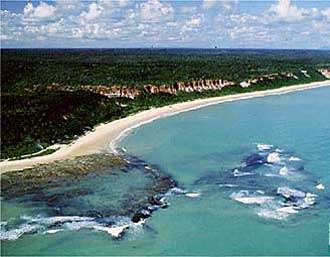
Arraial D'ajuda is located near Porto Seguro in the state of Bahia, it´s a rustic and elegant little city, with historical buildings and wonderful beaches.


This city is famous for it´s religious parties, some of the most tradicional are Saint Sebastian(20 January) and Saint Cosme and Saint Damian(September 27).
But the biggest is on August 15, it´s for a saint called Nossa Senhora D'ajuda it attracts thousands, tourists and locals to participate in this celebration.


There are too many beaches to list here but the most visiteds are Araçaí, Apaga Fogo, Canoas, Mucugê, Tororão e Pitinga. You´ll find all kinds of beaches there, even some nudism beaches.

While in the city there are inumerous activities for you, if you are into scuba diving there are operators there, they´ll take you to dive in Abrolhos(one of the most famous diving spot in Brazil). You´ll also find in the city, Lambada Classes and trekking trails.


The right place to be during the night is the "Broduei"(it´s pronounce is exactly like "Broadway"). There you´ll find bars and restaurants all over the street with all kinds of food(and I really mean all kinds, from Acarajé to Sushi) and live music. Besides that you also find there some people selling their handcrafts, a good souvenir to remember this paradise.


Here´s a little description of the most famous beaches. I took it from this site: http://www.bahia.com.br/viver_detalhe.asp?idl=5774&id=256

Apaga Fogo beach
It is good for swimming, fishing and nautical sports such as kayaks, windsurf and jet ski. The reefs form natural pools at low tides. After the ferryboat crossing,it is the first beach of Arraial d?Ajuda,on the right margin of Buranhém River.

Araçaípe beach
It is across from a private property. The sea is calm and there are natural pools due to the existence of reefs. There are many shells on the sand. A modern water park was built there.

Mucugê beach
It has calm waters with natural pools formed by the reefs. Good for swimming. It has beach kiosks.

Parracho beach
Due to its calm waters, it is very sought after by divers. Tourists can rent nautical equipment in kiosks.

Pitinga beach
One of the most beautiful beaches of Arraial, it has an inlet of strong waves. During the low tide, the tourists can swim in its natural pools. The sand is soft and there are some kiosks. There is a nudism area, on a calmer stretch in the south.

Taípe beach
It is a calm beach, isolated by high cliffs of up to 20 meters in height. Open sea, with big waves, good for fishing. Once it is a desert beach, Taípe is sought after by nudists and by turtles during the spawning season. Four kiosks offer bar and restaurant services, restrooms and a parking area. This beach has access for cars, before the bridge over Taípe River.

Wednesday, April 16, 2008

Bondi Beach


Bondi Beach is a world famous suburb and beachside locality of Sydney, capital of the Australian state of New South Wales.

Overview

The closest and arguably the most accessible ocean beach to the centre of Sydney, Bondi has become synonymous with Sydney's beach lifestyle - busloads of Japanese tourists, for example, frequently travel to Bondi direct from the airport, just so they can feel the warm yellow sand between their toes.

Bondi has become a favourite of the "barmy army" of British tourists, who annually gather on its sands for a Southern Hemisphere Christmas in the sun.Due to the worldwide popularity, Bondi is now home to numerous youth hostels with backpackers who congregate mainly in the summer months so it is not uncommon to hear Norwegian, French, German, Dutch, Swedish, Danish or Spanish while walking across the beach or through the cafes.

Bondi Beach has a vaguely alternative feel, despite the obvious commercialism present, and attracts a large number of "individuals": watch out, for example, for the guy who will strip off near the shops, to walk stark naked through the traffic on Campbell Parade, before going down to the beach.

Bondi Beach is very tolerant as topless sunbathing is common and gay and lesbian couples displaying affection is common.

How to Get There

By bus

Buses run to Bondi Beach in approximately 10 minute intervals from Bondi Junction and the City during peak times (6am till 9pm) then at 15 minute intervals from approximately (9pm till 1am) then every half hour during the early hours. Buses from the City to Bondi Beach all run from Circular Quay and take approximately 45 minutes (more in heavy traffic) to make the journey. The city terminus is in Alfred Street, opposite Wharf 2 at stand D. Buses may be numbered 333-prepay (purchase a ticket beforehand at a nearby ticket vendor), 380, 382 or L82 with the destinations showing North Bondi, Dover Heights, Watsons Bay or Bondi Beach. Collectively, these are called the "380 bus" - all buses continue to Bondi Beach. The bus route passes along Elizabeth StreetHyde Park, turning at Liverpool street up to Taylor Square, thereafter to Paddington and Bondi Junction via Oxford Street.The fare from Circular Quay is $3.70. For more information on bus timetables go to: http://www.sydneybuses.info/ or call 131 500 next to

By Plane

Taxis from the Airport cost around $30 and takes about 25 minutes

Shuttle services run from the airport direct to Bondi and Cost around $15 per person. You need to get on a Eastern suburbs shuttle. [2]

The cheapest and also the slowest way is to get bus 400 to Bondi Junction direct from the airport, and then get bus 380 with runs right along the beach (Campbell Pde) terminating at the top of the hill in North Bondi.

By train

From central Sydney, take the Eastern Suburbs and Illawarra line trains from Central, Town Hall or Martin Place stations to Bondi Junction (10 mins). From there, a bus (lines 380, 381, 382, L82, 15 mins), taxi or reasonable walk will get you to Bondi Beach (2 km downhill). The train ride takes 10 minutes from Town Hall to Bondi J

Things to Do

  • Walk on the aformentioned coastal walk (at the bottom of Notts Avenue, off Campbell Parade) to Tamarama , Bronte , Coogee and eventually Maroubra.
  • Bondi Icebergs [4] - a popular rock swimming pool with restaurant and bar facilities upstairs that look over the entire beach. It is named for the brave swimmers who compete here in the winter months. Opening hours: Monday to Friday: 6.00am and 7.00pm, Saturday & Sunday:6.30am - 6.30pm. Entry $4 Adults/$2.50 Children/Seniors.
  • Surf with Let's Go Surfing[5], the only surf school on Bondi Beach. Alternatively, shops along Campebell Parade sell / rent surf boards and body boards, as well as wetsuits.
  • Swim but always stay between the flags where lifeguards keep a watch on the swimmers. On weekends and public holidays, volunteer lifesavers also perform watch duty on the beach. Rip current tends to be strong on the beach, so the unexperienced swimmers should always find out the sea condition from the lifeguard or lifesaver before entering the water.

Events

  • the Festival of the Winds [6]- an annual kite-flying Festival in September.
  • North Bondi Surf Classic[7] Held each year a 2k swimming race for people of all ages.
  • Sculpture by the Sea [8] an annual outdoor display of sculpture (over 100 separate works) distributed along the Bondi to Tamarama coastal walk (begins at the bottom of Notts Avenue, off Campbell

What to Eat

  • Bondi Trattoria Café Restaurant, 34b Campbell Parade, tel 02 9365 4303
  • Bondi Surf Seafoods, 128 Campbell Parade. ph 02 9130 4554. The Bondi Beach Fish Shop is the place to go for that dubious local speciality, the deep fried Mars Bar. Fans of the bar counsel caution: no matter how strong you think you are, restrict yourself to one deep fried Mars Bar daily.Bondi Surf Seafoods
  • Gelato Bar Café Restaurant, 140 Campbell Parade. ph 02 9130 4033. Gelato Bar is one of the oldest places in Bondi and has built up a reputation over 40 years. They specialise in French pastries, crepes and of course gelato. It is a wondeful place to go for a quick coffee or even dinner, the food is a mix of Mediterranean using fresh Australian produce. It overlooks the beachfront and has a wonderful view.

What to Drink

The two biggest bars in Bondi are the Beach Road Hotel and Bondi Hotel. Both are excellent places to catch the finals in a cricket match or have a few drinks with your mates. Another great bar is at the previously mentioned Bondi Icebergs, it has a great view of the beach and relatively cheap drinks. Make sure to take some form of ID that proves you live outside a 5km radius as this is a club and the rule require that you be a member if you are inside 5km. Of course, if you want to be "seen" then go for Ravesis on the corner of Hall St and Campbell parade. It attracts the beatufil people.. or at least those who think they are beautiful. Bondi locals will tend to go for BBs. Relocated from its cramped spot on Curlewis St, BBs is hidden down an alley next to the Mambo surf shop on Campbell Parade. Live music, surf videos and a more relaxed vibe than the goldfish bowl up the road.

Friday, April 4, 2008

Waikiki Beach - Hawaii

Waikiki seen from the top of Diamond Head (Lēʻahi). Green area below is the lawn at Kapiʻolani Park.

Waikiki seen from the top of Diamond HeadLēʻahi). Green area below is the lawn at Kapiʻolani Park.

Waikiki (Hawaiian Waikīkī pronounced [ʋaikiːkiː]) is a neighborhood of Honolulu, in the City & County of Honolulu, on the south shore of the island of Oahu, Hawaii. Waikiki Beach is the shoreline fronting Waikiki and one of the best known beaches in the world.

Waikiki beach at night

Waikiki beach at night

The neighborhood extends from the Ala Wai Canal (a channel dug to drain former wetlands) on the west and north, to Diamond Head (Lēʻahi) on the east. The name means spouting water in Hawaiian for springs and streams that fed wetlands that once separated Waikiki from the interior. Waikiki has long been a place of relaxation. In particular, the area was a retreat for Hawaiian royalty in the 1800s.

Waikiki beach looking towards Diamond Head

Waikiki beach looking towards Diamond Head

Today the neighborhood and beach are considered the center of the tourist industry in Hawaii, with an abundance of both high-rise resort hotels (including the Hilton Hawaiian Village, the Halekulani hotel, the Hyatt Regency Waikiki, and the Sheraton Waikiki) and historic hotels dating back to the early 20th century (such as the Moana Surfrider Hotel and the Royal Hawaiian Hotel).

Waikiki beach at sunset

As seen in the picture, Waikiki Beach is noted for its magnificent view of Diamond Head. The frequently visited tourist beach, easily accessible by an alley next to the Royal Hawaiian Hotel, is actually fairly short, with half of it marked off for surfers. For some distance into the ocean the water is quite shallow, although there are numerous rocks on the bottom, so waders should watch where they put their feet. As with most ocean beaches the waves can have some force, particularly on windy days.

The beach has had its problems with erosion, leading to the construction of groins and beach replenishment projects. For example, in the 1920s and 1930s sand was obtained from Manhattan Beach, California, and transported via ship and barges to Waikiki.[1]

Since 2001, there have been free movies on the beach. Many tourists from around the world can view a movie on an outdoor 30 foot screen. This particular free movie event in Waikiki is called "Sunset on the Beach".


  • Swim in Lifeguarded Areas
  • Never Swim Alone
  • Don't Dive Into Unknown Water or Into Shallow Breaking Waves
  • Ask a Lifeguard About Beach and Surf Conditions Before Swimming
  • If You Are Unable to Swim Out of a Strong Current, Signal for Help
  • Rely on Your Swimming Ability Rather Than a Flotation Device
  • Look For, Read and Obey All Beach Safety Signs and Symbols
  • If In Doubt, Just Stay Out!

Thursday, April 3, 2008

Bali: Overview


Lush and languid, Bali beguiles with its beach-side charms.

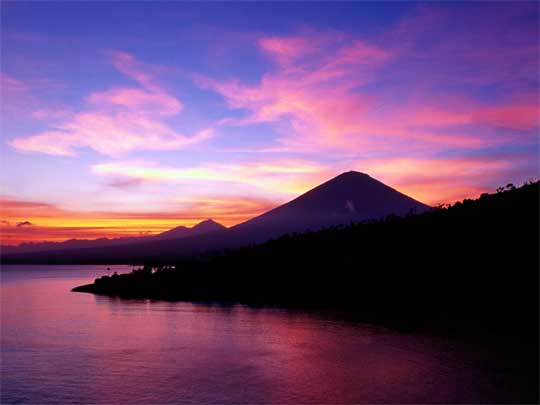
Bali is so picturesque that you could be fooled into thinking it was a painted backdrop: rice paddies trip down hillsides like giant steps, volcanoes soar through the clouds, the forests are lush and tropical, and the beaches are lapped by the warm waters of the Indian Ocean.

Recent tragic events have scared away many of those who simply saw Bali as a place for cheap beer. While the Bintang is still tasty and plentiful, Bali's temples, ceremonies, beaches, mountains and passion for life are undiminished and more easily enjoyed than ever.

Travel Warning: Check Before You Leave

High level terrorism-related warnings have been issued by Western governments concerning travel in Indonesia, including Bali. Travellers are advised to check with their local embassy or travel advisory for up-to-date information before making travel plans. Terrorist bombings aimed at tourists took place in 2002 and 2005 and although it is normally safe, the island could be a target in the future.

Check out Safe Travel for updated government warnings.

severity: High-level alert

Weather

Just 8° south of the equator, Bali has a tropical climate - the average temperature hovers around 30°C (mid-80s°F) all year. Direct sun feels incredibly hot, especially in the middle of the day. In the wet season, from October to March, the humidity can be very high and oppressive. The almost daily tropical downpours come as a relief, then pass quickly, leaving flooded streets and renewed humidity. The dry season (April to September) is generally sunnier, less humid and, from a weather point of view, the best time to visit, though downpours can occur at any time.

There are marked variations across the island. The coast is hotter, but sea breezes can temper the heat. As you move inland you also move up, so the altitude works to keep things cool - at times it can get chilly up in the highlands, and a warm sweater or light jacket can be a good idea in mountain villages such as Kintamani and Candikuning. The northern slopes of Gunung Batur always seem to be wet and misty, while a few kilometres away, the east coast is nearly always dry and sunny.

Air-con is not really needed on Bali at night. A cool breeze always seems to spring up in the evening, and the open bamboo windows, so common in Balinese architecture, make the most of the light breezes.

Events

Apart from the usual western calendar, the Balinese also use two local calendars, the Hindu saka and the wuku . The wuku calendar, which is used to determine festival dates, uses 10 different types of weeks between one and 10 days long, all running simultaneously! The intersection of the various weeks determines auspicious days. It's impossible to work it out yourself: when you arrive in Bali, go to a tourist office and ask which festivals and celebrations are coming up. Try to get to at least one.

The Galungan Festival , Bali's major feast, is held throughout the island and is an annual event in the wuku year. During this 10-day period all the gods come down to earth for the festivities and barongs (mythical lion-dog creatures) prance from temple to temple and village to village. The last and most important day of the festival is Kuningan .

is the major festival of the saka year - it's the last day of the year, and usually falls towards the end of March or the beginning of April. The day before is set aside as a day of purification across the island. The night before, evil spirits are noisily chased away with cymbals, gongs, drums and flaming torches. On Nyepi itself, everyone stays quietly at home, making no noise, using no lights and doing no cooking. The idea is that when evil spirits descend, they are fooled into thinking that Bali is uninhabited and leave the island in peace for another year.

Getting There

Most international visitors arrive by air, either directly or via Jakarta, though island hoppers can catch frequent ferries from the neighbouring islands of Java and Lombok. There are direct flights to Jakarta and Bali from major airline hubs in Asia such as Singapore, Bangkok and Hong Kong. There are direct flights from major Australian cities. The departure tax on international flights is about US$10.00 . Bali is well connected to most of Indonesia and has direct domestic flights to Java, Lombok and outlying islands on a daily basis. Fares have increased considerably in recent years but are still good value. Domestic departure tax is US$2.00 Transport from Ngurah Rai international airport, 2.5km (1.5mi) south of Kuta, is quite simple. Pay a set price at the airport taxi counter, or walk across the airport car park and hail a metered cab outside the airport's roadway exit. The impecunious (and lightly laden) can walk straight up the road to Kuta, although it's a more pleasant stroll along the beach. A ferry shuttles constantly between the western Balinese port of Gilimanuk and Ketapang in eastern Java. Boat/bus combination tickets between Denpasar and Javanese cities can be purchased. Ferries between the eastern Balinese port of Padangbai and Lembar on the west coast of Lombok depart throughout the day. A few ferries link Bali with other Indonesian islands.

Getting Around

The main forms of public transport on Bali are the cheap buses and bemos that run on more or less set routes within or between towns. If you want your own transport, you can charter a bemo or rent a car, motorcycle or bicycle. The Balinese drive on the left, use their horns a lot and give way to traffic pulling onto the road. Tourist shuttle buses, running between the major tourist centres, are more expensive than public transport but are also more comfortable and convenient.

VISA REGULATIONS

The government of Indonesia has changed its visa policy for foreign tourists effective February 1st., 2004.

Visiting Indonesia Without Any Visa

Entering Indonesia without any visa is possible now only for nationals of the following 11 countries and territories: Brunei Darussalam, Chile, Hong Kong, Macau, Malaysia, Morocco, Peru, the Philippines, Singapore, Thailand and Vietnam.

Citizens of the above countries will be issued on arrival a stay permit for 30 days free of charge upon presentation of a passport which is valid at least for another 6 months. This stay permit cannot be extended or converted into another type of visa.

VISA on ARRIVAL (VoA)

This facility is now available for nationals of the following countries: Algeria, Argentina, Australia, Austria, Bahrain, Belgium, Brazil, Bulgaria, Cambodia, Canada, Czech Republic, Denmark, Egypt, Estonia, Fiji, Finland, France, Germany, Greece, Holland, Hungary, Iceland, India, Iran, Ireland, Italy, Japan, Kuwait, Laos, Latvia, Libya, Lichtenstein, Lithuania, Luxembourg, Maldives, Malta, Mexico, Monaco, New Zealand, Norway, Oman, Panama, People's Republic of China, Poland, Portugal, Quatar, Romania, Russia, Saudi Arabia, Slovakia, Slovenia, South Africa, South Korea, Spain, Suriname, Switzerland, Sweden, Taiwan, Tunisia, United Arab Emirates, United Kingdom and the United States of America.

Citizens of these countries will be able to apply for a VoA valid for either 7 or 30 days upon arrival by air in Bali, Jakarta and a few other international airports or by ship at a limited number of Indonesian sea ports. A 7-day visa costs US$10 and a 30-day visa costs US$25.

The VoA cannot be extended or converted into any other kind of visa. Also be aware that Immigration officials calculate the 30-day period as follows: your arrival day is counted as your first day, and you must leave the country on the 30th. day!

How to Obtain the "VISA on ARRIVAL" (VoA)

Travelers from the above countries must be in posession of a passport which is valid for at least 6 months from the date of arrival and the completed embarkation/disembarkation card they received from their airline. They must also be able to prove they have sufficient funds for their stay in Indonesia.

Arriving travelers with Visa-On-Arrival status have to go first to one of the 'VoA Counters' to pay the appropriate fee and have their passports stamped with the VoA before proceeding to the Immigration Clearance Desk. An official bank is part of the VoA service counters. Payment of visa fees can be made in all major currencies or by VISA or MASTERCARD.


Sunday, March 30, 2008

St. Tropez


International tourist mecca, St. Tropez's mythical tame has played a largepart in the renown of the whole Côte d' Azur.

In St. Tropez everything is famous :

- Beaches : Bouillabaisse Beach, Caneliers Beach, Salins Beach; there are at least 40 on the peninsula.

- There is the Place des Lices where movie stars and local stars get togettier to play a game of boules or sip Pastis under the plane trees.


Everybody, of course, wears their leather Tropéziennes sandals !

St. Tropez became "St. Trop" when the show business people, artists and writers all fell under the spell of this charming little port in the 1950's.

In the summer one could bump into Picasso, Francoise Sagan, Jacques Prévert and many others, With the arrival of Brigitte Bardot in the 6O's the myth was installed for good. Since then St. Tropez has become the in vacation spot for chic Parisians and the international Jet Set.

People watching is a favorite sport here in the summer, Visitors like to sit at the outdoor cafés hoping either to be seen or to see some one else. Competition is rife. Huge yachts line up in the port rivaling to see which is the biggest, the prettiest, the best kept, or has the snappiest crew .

Only beautiful people hop on board. It is quite a spectacle for the casual visitor !...

St. Tropez's true nature can really only be appreciated in the off months.

If you have the choice come here in May, June or September, without the crowds one can take the time to admire the charming little streets and alleys.

Early in the morning at the Place aux Herbes one can find fruit vegetables and flowers and watch the local fishermen selling their new catch.

This is also the neighborhood of the famous brasseries Le Gorille and Sénéquier.

A typical Provengal market is held every Tuesday and Saturday morning in the Place des Lices.
Religious and festive processions called "Bravades" are lively celebrations which begin in May and continue until the 15th of June.

Related Posts Plugin for WordPress, Blogger...